Is SaaS taxable in Colorado?
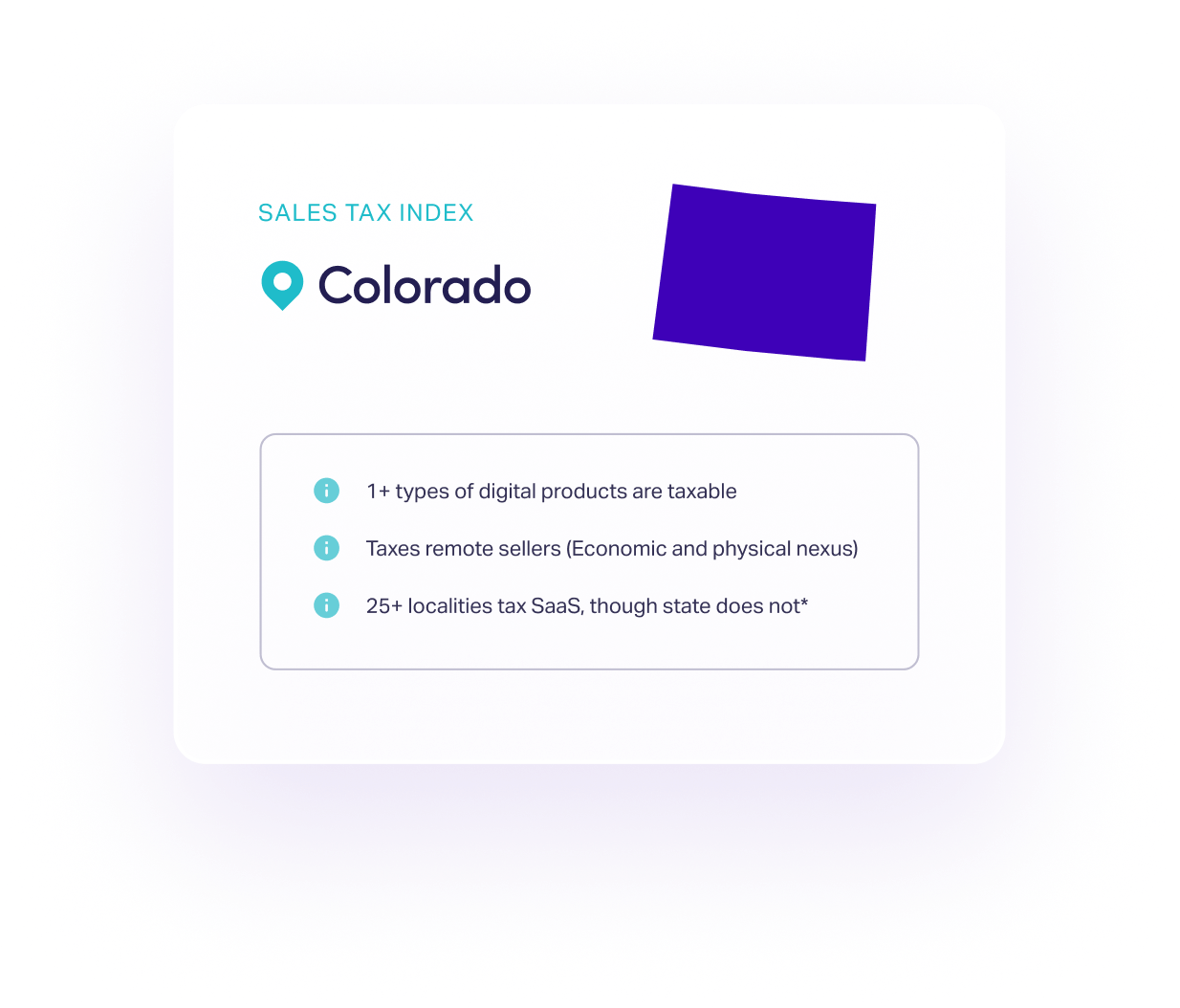
Colorado imposes a sales tax on certain tangible personal property and some digital services. However, determining the taxability of SaaS products specifically in Colorado can be a bit challenging, primarily due to the state’s unique home-rule jurisdictions.
In general, SaaS is considered a non-tangible service; therefore, it is not subject to sales tax at the state level in Colorado. But Colorado has home-rule jurisdictions, which means that local cities can establish their sales tax regulations, which could result in independent taxation rules concerning SaaS.
It is crucial for businesses operating in these home-rule cities to understand their local tax obligations and ensure compliance to avoid potential legal and financial challenges.
*Starting January 1, 2027, SaaS would be taxable in Colorado at the state level.
Understanding Colorado’s home rule jurisdictions
Colorado has a system of home rule jurisdictions that allows certain cities to establish their sales tax regulations independently from state-level sales tax laws. This system was established to give cities more control over their taxation policies and to ensure that their unique needs and circumstances are taken into account.
Home rule cities can extend their sales tax codes to tax SaaS, making it essential for businesses to keep track of these differing local taxation rules and regulations in addition to state requirements. Some of the large home rule cities in Colorado include Denver, Boulder, and Colorado Springs.
To determine the taxability of SaaS products in various home-rule cities in Colorado, it is necessary to review their tax regulations and stay updated on the changes that may occur over time. This process can be time-consuming and complicated, and businesses should consider seeking professional tax advice if they are unsure about their obligations.
How to determine if your product is taxable in Colorado
To determine if you have a taxing obligation in Colorado or in a home rule city, you must first identify whether your products fall under a taxable category in any Colorado jurisdiction.
Next, you must determine whether you have established nexus at the state or local levels. Sales tax nexus is the relationship between a business and a jurisdiction that requires the business to collect and remit sales tax on behalf of that jurisdiction.
There are two ways to establish nexus in Colorado:
- Physical nexus: Having employees, office locations, or other significant physical presence in Colorado
- Economic nexus: Meeting a threshold of $100,000 in sales to Colorado customers within a calendar year
Nexus in Colorado is complicated by its sometimes conflicting tax laws, so it’s equally important for businesses to monitor their overall activity in the state as well as their products’ specific taxability in Colorado’s many jurisdictions.
Sales tax compliance in Colorado
Once you’ve determined that your product is taxable in one or more Colorado jurisdictions, the next step is to collect sales tax from customers. It’s important to consult local tax authorities to determine the correct tax rates and rules for each relevant jurisdiction.
You’ll also need to register to collect sales tax, and file sales tax returns and remit sales tax to each jurisdiction. This process can become quite tedious for businesses with significant nexus in Colorado, and in response to criticism of the bureaucratic burden this puts on businesses, the state has worked in recent years to streamline the process further.
Colorado compliance can be made easier with the help of a sales tax automation tool. However, it’s important especially for businesses selling SaaS and other digital products to choose a platform that includes coverage for home rule jurisdictions in Colorado and other states.
As tax laws continue to evolve, it is essential for SaaS providers to stay up to date on the latest regulations and guidance. Working with a knowledgeable tax professional or using tax compliance software can help ensure accuracy and compliance with Colorado tax laws.