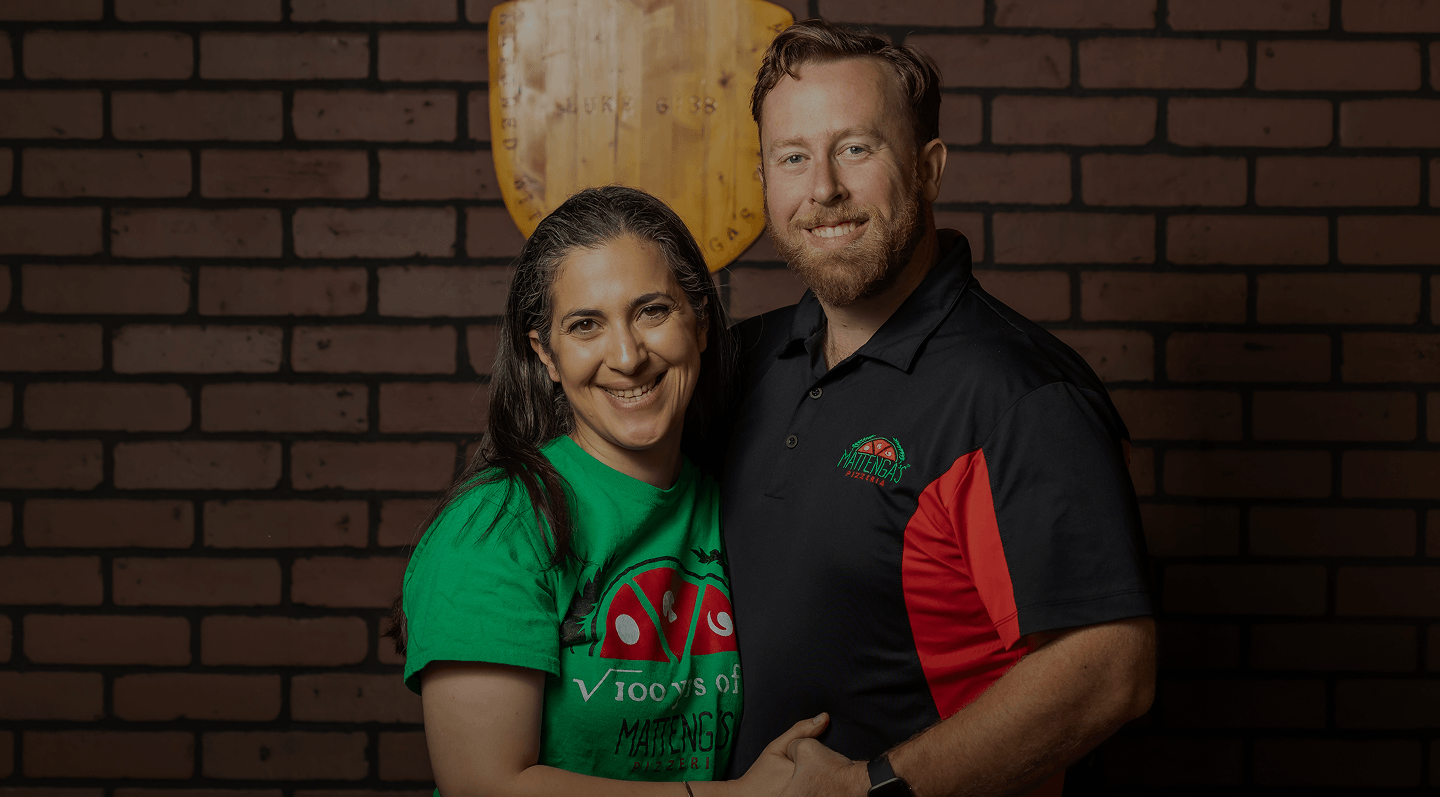

Colin Gibbings, Tax Director at Vanta, runs the entire tax function for one of the fastest-moving companies in trust management. His stack includes NetSuite as the system of record, a rotation of AI agents he calls his team, and Anrok underneath.
Seventeen years of walking into new tax functions
Colin has spent almost 17 years in tax, with stops at PwC, Spotify, Headspace, Shutterstock, and Coach. Across three heads of tax roles, his first move at any new company is to understand where the business is headed, find any exposures, and ensure leadership knows about it.
"My guiding question is where the business is going. Not just meeting it today, but asking what I wish I had gotten right two or three years from now, and doing it now."
That lens has sharpened over his career as indirect tax moved from the background to the front of the job. While income tax gives you months to plan a position, indirect tax gives you the moment of the transaction.
"If you don't get it right up front and you don't collect it, you're going to have a real hard time going back to the customer. It's fast, it's immediate, and the dollar amounts grow quickly."
Compliance was answered before he started
When Colin was interviewing at Vanta in late 2025, he asked what every incoming tax leader asks: what's the state of compliance? The answer changed how he read the whole role.
"I was thrilled during the interview process that Vanta had Anrok as its tax engine. I've walked into places that didn't have one. It was a dream to join a company with a tax engine as nice as Anrok that had already been running for years."
Anrok has been Vanta's tax engine since roughly 2021. Before that, there was no engine at all. Compliance was manual and adviser-driven, with different advisers in different countries and tax added to invoices by hand wherever someone knew it applied. The era with Anrok is clean, but the manual era before it is where the cleanup work lives.
Today, Vanta files in 27 US jurisdictions and internationally, with California, Colorado, and Utah joining Jan. 1, 2027 as new SaaS taxability rules take effect. The footprint is about to move again, and the platform moves with it.
A single record from deal to filing
Vanta's tax data travels a defined path. Salesforce holds the deal and contract terms, and it's also where sales collects customer VAT IDs. Contract changes flow into the billing layer, which syncs official invoice and revenue records into NetSuite, Vanta's ERP and single source for invoicing. Anrok connects to NetSuite, where invoices and credit memos carry the tax.
Everything runs on one chain, with one enriched record, and a tax engine reading from the same system that supports the financial statements. That design choice is what makes everything that follows possible.
The monthly discipline: reconciliation
Colin doesn't trust an instant answer because it feels right. He trusts it because of the process behind it. Every month, he reconciles what Anrok says Vanta owes and will remit against what NetSuite says is sitting in the payable.
The two systems should agree. In the real world, they drift, and almost never because of tax. It may happen because a billing teammate edits an invoice after a filing cutoff or a credit memo is recorded in one system but not the other. But reconciliation is how Colin catches it before it compounds.
"My financial reporting system is what supports my financial statements. When we get pulled into a financial statement audit, they're not going to ask me to pull detail from Anrok. They're going to say, 'show me your sales tax account in NetSuite.' So it's important there's no disconnect between the two."
When Colin started reconciling, he found variances that had gone unidentified for years, and resolved them. One example: Washington's B&O tax, which Anrok correctly calculates and remits as part of the tax due, but which by design is a tax on the seller, not collected from customers. Nobody had set up the accrual on Vanta's books to match. The reconciliation surfaced it, and a monthly accrual now builds the payable the way it should.
The discipline pays a compounding return. Colin's monthly rec now lands within roughly $10K, usually traceable to credit memos, and the whole exercise takes him four to six hours a month depending on what turns up.
"My confidence in our reporting, for both tax compliance and financial statement purposes, tracks directly with how cleanly I can reconcile Anrok to our financial reporting system. Proving this data out ahead of any type of audit is one of the most valuable things I can do."
He is direct about how rare that discipline is. Most companies aren't reconciling monthly. In Colin's perspective, that is the cheapest audit protection there is.
From monthly habit to real-time check
The next step is taking himself out of the loop. Vanta recently added the Anrok APIs to its stack, and Colin is wiring reconciliation checks through Snowflake and into Sigma, so the comparison between Anrok and NetSuite runs automatically instead of once a month by hand.
"Automating our sales tax account reconciliation will be a big win for us. This will monitor and alert us in real-time any instances that Anrok and Netsuite have transaction variances. Doing so will allow us to identify and fix in real-time rather than waiting until the end of the month."
"AI is my team"
Colin corrects himself when he says he's a team of one.
"AI is my supporting team right now. We have Claude, ChatGPT, and Gemini, and I'll have all three doing different things. One is reviewing a memo, one is preparing a taxability analysis, and the other is retrieving information across our various systems via MCP. AI has completely re-invented what a tax function can look like, and it's exciting to be in the driver seat with all these tools at my disposal."
He is equally clear about where the human sits. The models are confident even when they're wrong, so everything gets his review. But for first-pass notes, quick taxability reads, and initial research, they give him speed a solo function couldn't otherwise have. Similar to his reconciliation philosophy, Colin lets the system do the run, while he keeps the judgment.
That's also why he's watching Anrok Atlas. Today, answering a question like, "how much did we sell in Japan in the last six months," means exporting transactions and summing them up. He wants to just ask.
"For example, I'd love for Anrok Atlas to tell me how much we sold in a jurisdiction, year to date, and for me to be able to trust that answer."
Preparing for what's next
When asked for the one feature he'd wave into existence, Colin didn't hesitate. He wants reconciliation built into the platform, with Anrok comparing its own data against the financial system and surfacing only the mismatches.
He's getting his wish.
A tax function of one, an engine underneath, and agents doing the running. Built for what's next.