Your agentic tax partner.
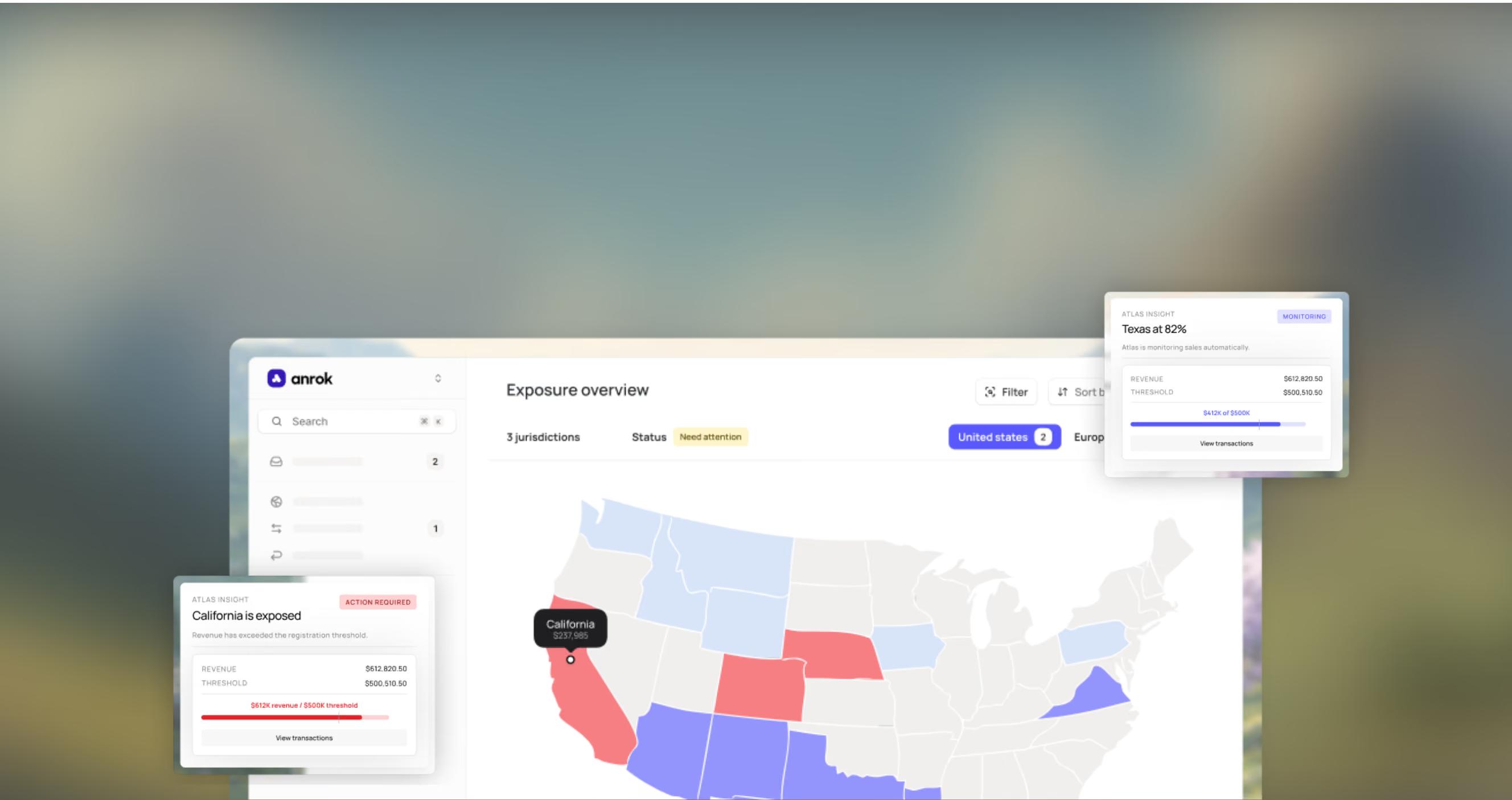
AI-native tax interface built directly into the platform. Anrok Atlas surfaces problems before you notice them. When you have questions,
it answers them instantly. Every time.
Join the waitlist and get beta access as early as May 1.
Built for what legacy tax tools can't handle.
Most tax tools make you do the work. Anrok Atlas does it for you, surfacing issues automatically, answering anything in seconds, and keeping every decision accessible no matter who's asking.
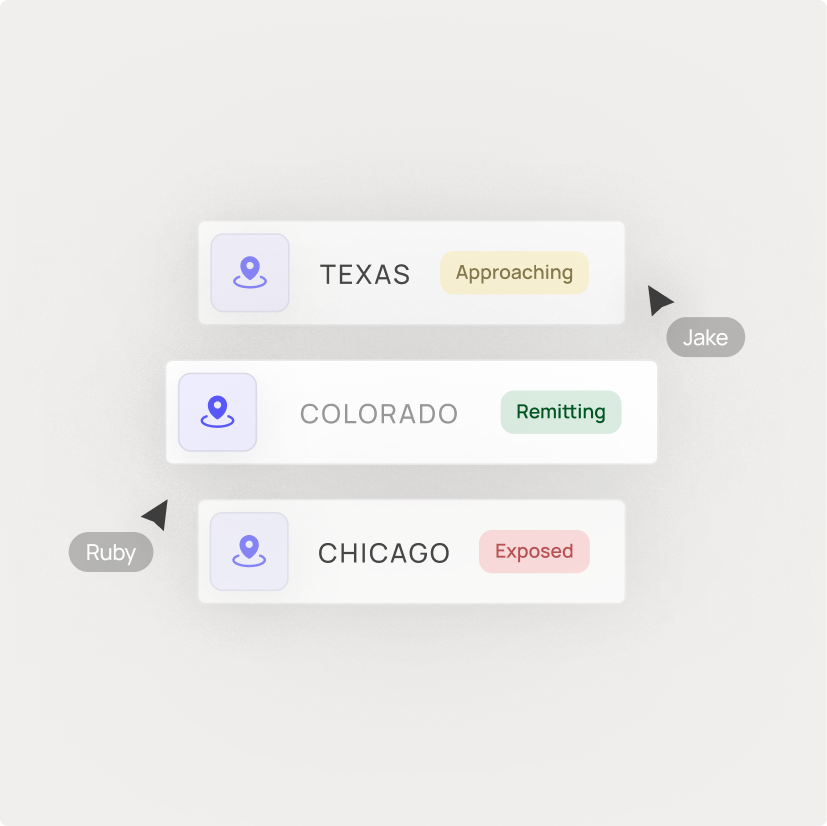
Finds problems before you do
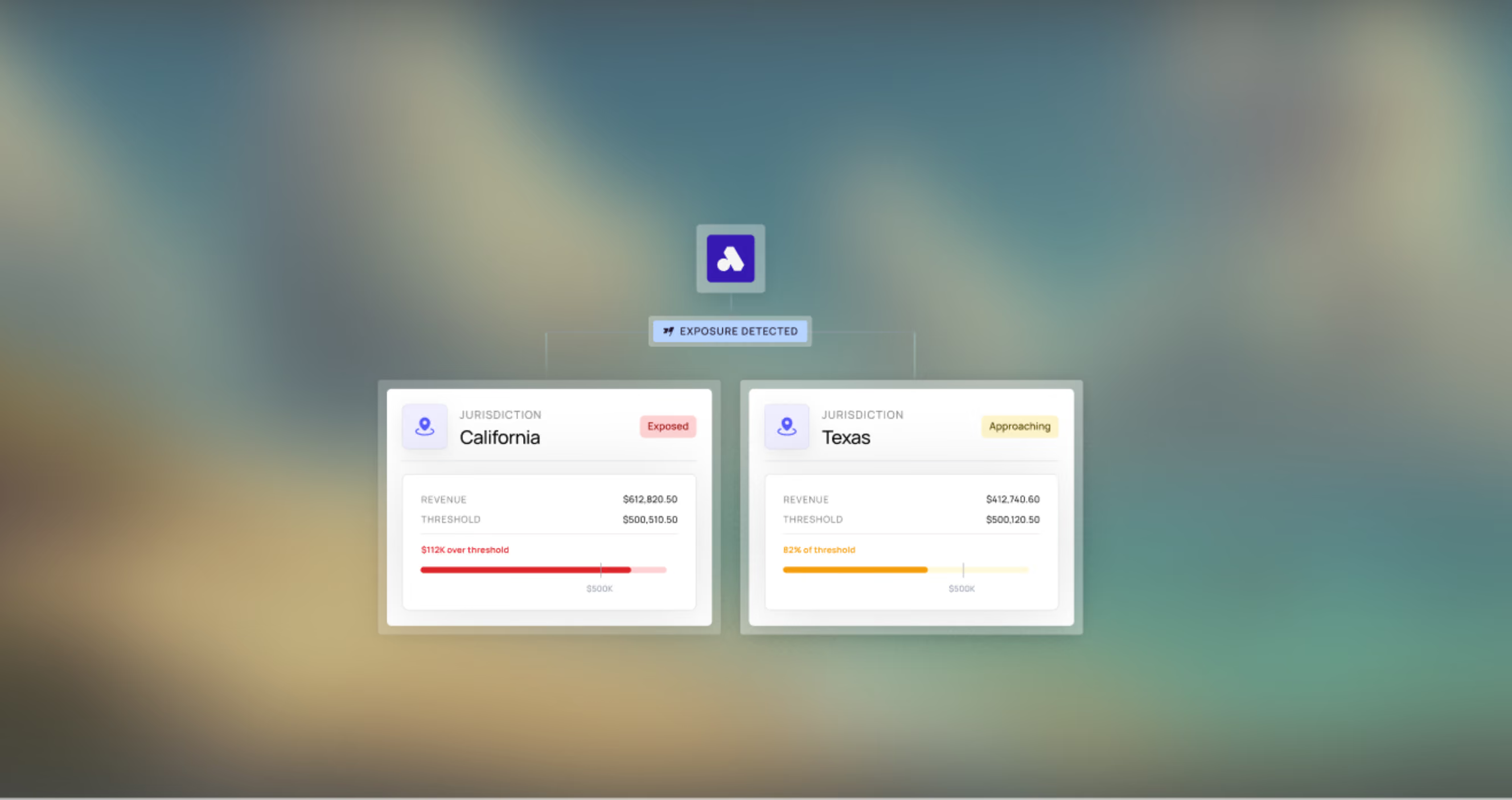
Anrok Atlas identifies discrepancies, triages integration issues, and surfaces problems before they become a risk. Hours of investigative work, down to zero.
Instant answers, no expertise required
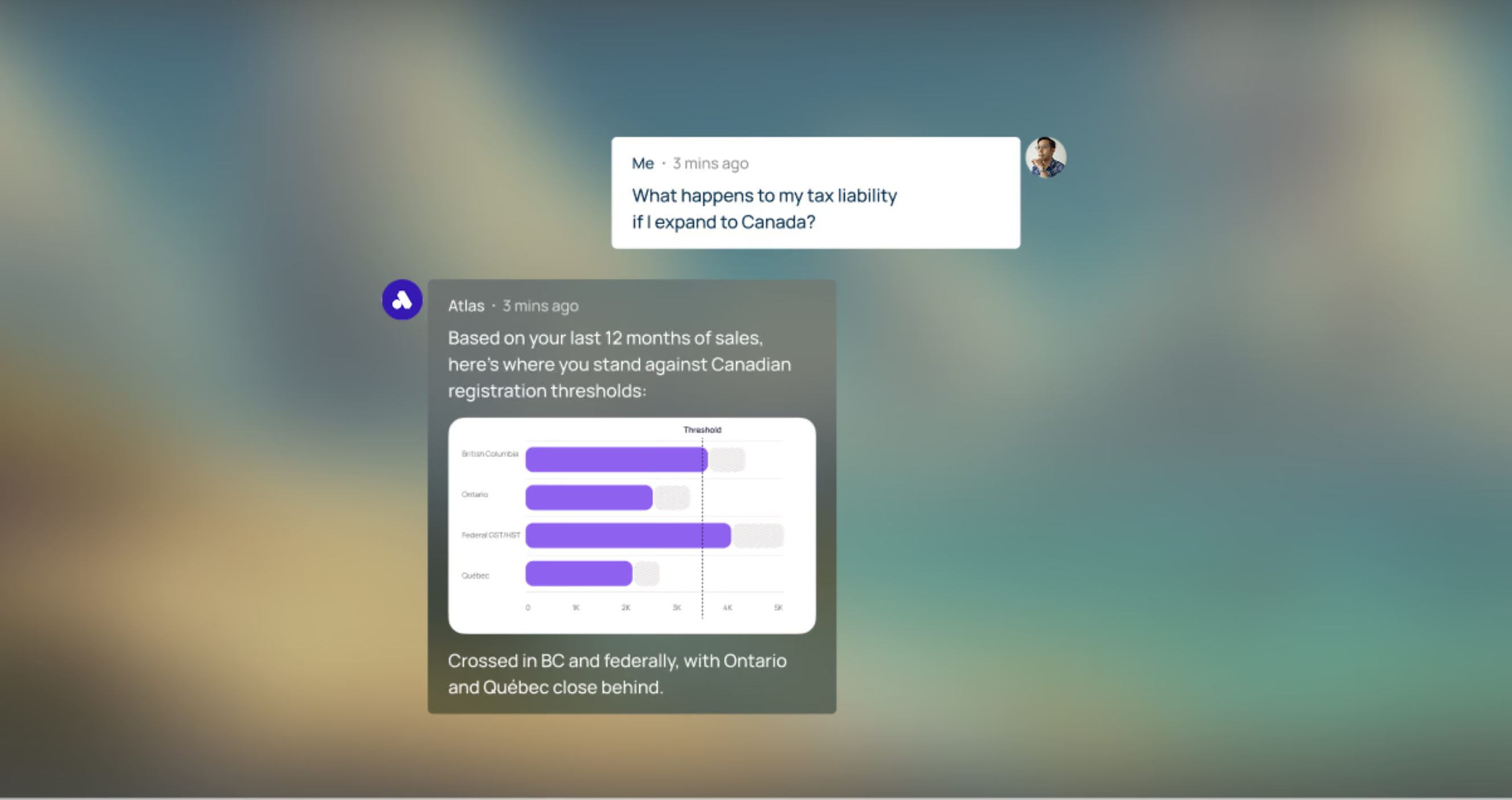
Ask about nexus exposure, audit risk, exemption certificates, or VAT obligations and get the right answer in seconds. No specialist, no wait, no research spiral.
A complete record, always audit-ready
Every decision, context, and action lives in Anrok Atlas and is accessible through a single conversation, keeping your operations resilient no matter who's asking.
Real answers to your hardest tax questions
Every answer. Every jurisdiction. Every time.
- Why doesn't your collected amount match what was remitted?
- What would flag you in a New York audit?
- What happens to my tax liability if I expand to Canada?
And it shows its work, all backed by Anrok's in-house tax expertise and verified by Big 4 accountants.
‍
Nothing else comes close
Built-in trust and transparency
Every answer includes clear reasoning and reflects expert review, so you always know what Atlas is doing and why.
Built for every kind of business
Designed to understand your business and questions, not generic ERP workflows.
Interactive and conversational
Ask about nexus exposure, audit risk, exemption certificates, or VAT obligations and get the right answers in seconds. No specialist, no wait, no research spiral.
Problems solved before they're problems
Anrok Atlas proactively monitors your tax data and flags what needs attention before it becomes a risk, filing issue, or audit conversation.
Frequently asked questions
What platforms do you support?
Today, Anrok supports WooCommerce and Shopify for end-to-end compliance. We also integrate natively with billing and invoicing platforms like Stripe, Quickbooks, Netsuite and Xero. If you sell across additional channels like Amazon, Etsy, or Walmart Marketplace, we can still reconcile and file from a unified view — just ask and we'll confirm your setup.
‍
What's the difference between Anrok and Woo Tax? ‍
Woo Tax calculates sales tax at checkout — but scaling businesses need a bit more support. Anrok handles the full lifecycle: registration, filing, and reconciliation. We pick up where Woo Tax leaves off.
‍
Do I need to change how I collect sales tax at checkout?
Nope. Anrok works alongside your existing checkout flow and helps manage tax end-to-end. We'll always support registration, filing, and making sure your remittances match your actual revenue. We even run validation checks on your 3rd party checkout calculations to catch any discrepancies.
What is sales tax nexus for eCommerce?
Nexus is the connection between your business and a state that requires you to collect and remit sales tax there. For eCommerce brands, this typically happens through 'economic nexus' — when you hit a threshold of sales or transactions in a state. After the 2018 Wayfair decision, most states now have economic nexus laws that apply to online sellers.
‍
How do I know where I need to register for sales tax?‍
When you connect your store, Anrok analyzes your sales history and shows you exactly where you have tax obligations. No spreadsheets, no guesswork. We flag states where you've crossed thresholds, and handle registration for you.
‍
What are typical economic nexus thresholds?‍
In Short, it depends on the states. Most states use either a financial threshold, like $100,000 in sales, OR a transaction threshold like 200 transactions — but it varies. Generally these are based on your past 12 months of sales, but definitions vary by state. Sell through a marketplace like Amazon? Some states count this towards economic nexus, while others don't. That's why Anrok tracks all of this automatically and alerts you when you're approaching or cross a threshhold.
‍
Does having inventory in a warehouse or 3PL create nexus?‍
Yes. Physical presence — including inventory stored in a third-party warehouse or fulfillment center — creates 'physical nexus' in that state, regardless of your sales volume there. If you use a 3PL or Amazon FBA, you likely have nexus in states where your products are stored.
Do marketplaces like Amazon collect and remit sales tax for sellers?‍
In most states, yes. Marketplace facilitator laws require platforms like Amazon, Etsy, Walmart, and eBay to collect and remit sales tax on behalf of third-party sellers. The rules vary by state, and you may still have registration and reporting obligations even when the marketplace handles collection.
‍
If marketplaces remit sales tax, do I still need to register?‍
It depends on the state. Some states require registration even if you only sell through marketplaces. Others don't. And if you sell both through marketplaces AND your own DTC store, you definitely need to register and file for your direct sales. Anrok helps you understand exactly what's required based on your specific sales mix.
What if I'm already behind on sales tax compliance?
You're not alone — most eCommerce brands we work with have some catching up to do. Anrok helps you get current: we'll assess where you have exposure, handle back-registrations where needed, and set you up so you stay compliant going forward. Many states offer voluntary disclosure agreements (VDAs) that can reduce penalties.
‍
How long does it take to get set up?
Most brands connect their store and see their full tax picture in under an hour. From there, we handle registration (which varies by state — typically 1-4 weeks) and start filing on your behalf. You'll go from 'I should probably deal with this' to fully compliant faster than you'd expect.
‍
When should an eCommerce brand register for sales tax in a new state?‍
As soon as you cross (or are about to cross) that state's nexus threshold. Anrok monitors your sales automatically and alerts you before you hit thresholds, giving you time to register proactively rather than retroactively.
How often do sales tax returns need to be filed?‍
It depends on the state and your sales volume there. Most states assign a filing frequency — monthly, quarterly, or annually — based on your tax liability. Higher volume means more frequent filing. Anrok manages all your filing deadlines automatically, so you never miss one.
‍
What happens if sales tax wasn't collected in the past?‍
This is more common than you'd think. Options include historical filing, voluntary disclosure agreements (VDAs), which may reduce penalties, or simply registering and starting to collect going forward. The best approach depends on your specific situation, exposure amount, and the states involved. Our team can help you evaluate your options.
How does Anrok handle product taxability across different states?
Clothing taxed in Texas but exempt in Pennsylvania. Digital goods taxable in some states, not others. Anrok maps your catalog to the right tax categories across every jurisdiction — built by tax experts who have thorougly analyzed the rules. We handle the complexity so you don't have to become a tax expert yourself.
‍
Are shipping and handling charges taxable?
It varies by state. Some states tax shipping, some don't, and some only tax it in certain circumstances (like when it's bundled with the product price). Anrok applies the correct treatment based on each state's rules and how shipping appears on your invoices.
What does Anrok automate that other solutions don't?
‍Some tax tools stop at calculation — they tell your checkout what rate to charge. Others only handle registration and filing. Anrok handles everything: identifying where you have nexus, registering you in those states, calculating tax, filing returns, remitting payments, and reconciling everything back to your actual revenue. Even if you use your commerce platform's tax engine we’ll validate your checkout calculations to catch discrepancies before they become audit issues.


%20(1).webp)