As development and distribution costs have decreased in recent years, it’s become possible for an innovative company to grow from new idea to market leader practically overnight. But when the revenue starts rolling in, having an unreliable finance tech stack will stop you from scaling in your tracks.
The finance tech stack is no longer just an accounting system—it's an architecture encompassing numerous interconnected tools and workflows. When your stack is fragmented, it impacts how fast you can close the books, how well you make capital allocation decisions, and whether you can forecast accurately.
If your finance stack feels outdated, you’re not alone. 50% of CFOs say digital transformation of finance is their top priority for 2026, according to Deloitte, and 49% are focused on automating more processes across their stack.
So whether you’re looking to tighten your workflows or overhaul your entire architecture, here are 7 tips for building a finance tech stack that will accelerate your growth—not slow it down.
1. Implement workflows before software
Although it’s tempting to jump straight to tools, any finance tech stack discussions should start with an end-to-end audit of your current workflows. Questions like:
What does your month-end close checklist look like?
How are you handling revenue recognition?
How are you currently matching transactions across bank accounts, billing platforms, and your general ledger?
The right technology should automate and simplify your existing finance workflows, not determine them for you. Layering software on top of broken processes will only create more complexity—especially as tools start automating tasks with AI. So before you begin implementing any tools, make sure you have well-defined workflows in place and a clear view of how you want to use technology to enhance them.
2. Consider a modular, API-first architecture over monolithic suites
Building a finance architecture used to mean choosing one of the few monolithic suites. But modern finance leaders are beginning to favor a modular approach, keeping a core system of record and integrating best-of-breed tools for billing, FP&A, tax compliance, and spend management.
Modular architecture enables you to choose the best solutions for your needs in each area. For example, if you charge based on consumption, and your all-in-one suite doesn’t provide good support for usage-based billing, you can partner with a billing tool that does, like Tabs.
3. Choose tools that scale with you, not ones that slow you down
The most costly decision isn’t picking the wrong tool–it’s picking one you’ll outgrow in 18 months. Your finance tech needs at Series B will look very different from your needs at Series A, and change will only continue as you grow. It’s important to partner with flexible tools that will support your needs as you grow, not rigid tools that will need to be replaced.
A finance team at an early-stage SaaS company might get started by setting up Stripe Billing to handle monthly subscriptions. But as the company grows it quickly needs to handle upfront payments and mid-cycle upgrades with prorated invoices. Then suddenly leadership announces they want to introduce a usage-based pricing tier alongside flat-rate subscriptions. Before the team knows it, they’ve hit the limits of their stack and are back on the market for new tools.
Modern companies can scale from a handful of customers to international presence practically overnight. Choosing tools that not only support your current complexity, but also can expand alongside your business, will only accelerate growth.
Here are some capabilities to look out for:
- Does the tool support multi-entity as an upgrade rather than a migration?
- Can it handle pricing model changes from flat-rate to usage-based?
- Does it integrate via API with both your current accounting system and the ERP you're likely to move to next?
4. Choose a billing system that matches your pricing model
SaaS, AI, and eCommerce billing goes far beyond basic invoicing. Modern teams need a billing platform that handles not only recurring subscriptions, but also proration, usage-based metering, hybrid pricing, and mid-cycle contract modifications.
Your billing platform impacts critical downstream processes such as revenue recognition, tax calculation, FP&A reporting, and cash flow forecasting. If your billing platform can’t accurately represent how you’re charging customers, every process it feeds inherits that mess.
First, teams adopting alternative pricing models, such as usage-based pricing and credit-based systems, should ensure that they’re partnering with a billing system that’s built to support their unique needs. Second, ensure your billing system has automated revenue recognition as a core capability—ASC 606 and IFRS 15 compliance gets exponentially harder as contract structures become more varied, and you don’t want to be stuck wrangling spreadsheets during a fundraise or an audit.
Finally, confirm your billing system integrates with your ERP, tax compliance platform, and FP&A, as this will allow it to pass clean data throughout your finance tech stack.
5. Automate tax compliance as critical infrastructure
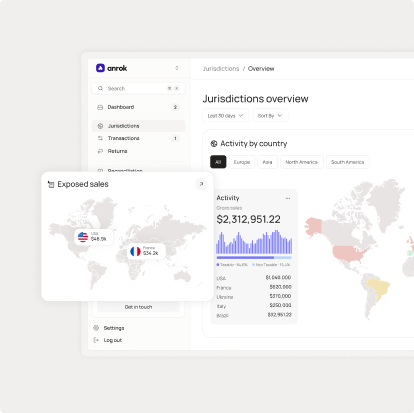
Tax compliance becomes more complex as revenue increases. While physical presence automatically triggers a sales tax collection obligation for sellers, since the 2018 Wayfair decision, companies are now required to collect sales tax in a state after they have triggered economic nexus, even when they don’t have physical presence. This is especially important for modern SaaS, eCommerce, and AI companies, who can scale from exposure in a handful of jurisdictions to exposure in hundreds in a matter of weeks—each with its own taxing regime.
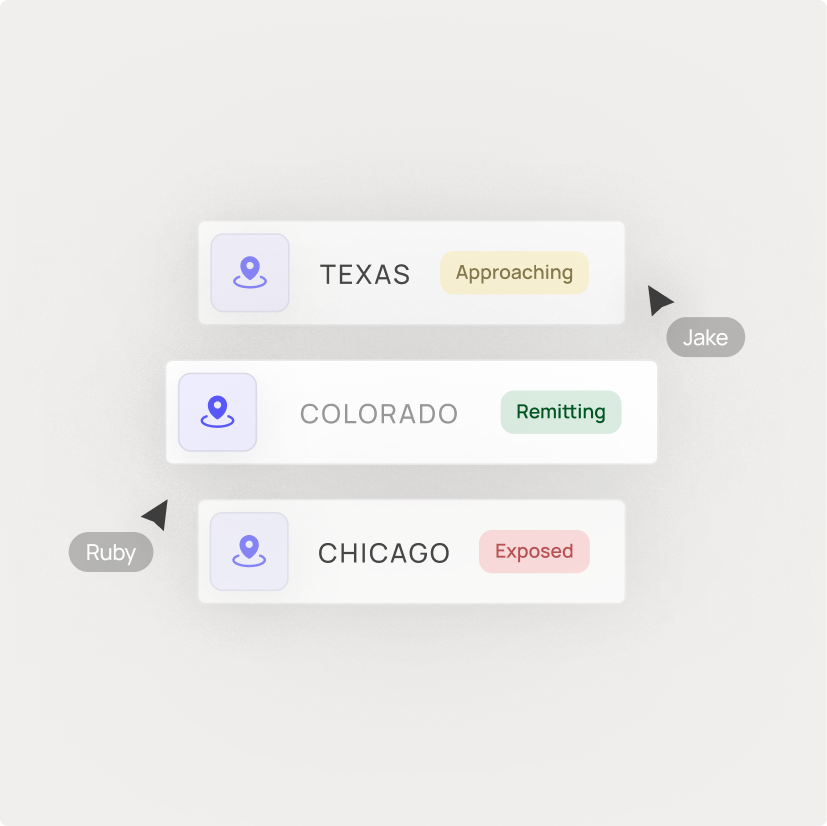
Partnering with an indirect tax automation platform that simplifies compliance is a key step to scaling your finance tech stack. Look for systems that support end-to-end coverage, not just sales tax calculation, proactive nexus exposure monitoring, apply accurate product taxability conclusions to invoices across jurisdictions, exemption certificate management, handle sales tax reporting, and native integrations with the tools in your stack. Companies with global operations, or aspirations to scale internationally, should partner with a sales tax automation platform that supports international VAT and GST compliance.
Getting indirect tax compliance right isn’t a nice-to-have—unaddressed tax exposure can create material risk during fundraising, M&A, and audits, and non-compliance can lead to notices from states, penalties, and other legal consequences. The companies that treat tax compliance as critical infrastructure today won't face a fire drill before their next fundraise, audit, or international expansion.
6. Invest in FP&A tooling that connects strategy to execution
For most companies, FP&A begins in spreadsheets. But many make the mistake of continuing to manage FP&A in spreadsheets for too long, leaving finance teams spending hours every week wrangling data across tabs. When it comes time for board meetings and fundraises, manual processes begin to break under the weight of version control issues, manual consolidation, and formula errors.
Investing in an FP&A tool enables you to connect finance, operations, and workforce management into a single continuous view and transform planning from an annual exercise into an ongoing capability. Automating these FP&A workflows relieves finance teams from tedious manual work and frees their time for strategic, high-value work, such as strategic scenario planning and investor-ready reporting.
7. Deploy AI for high-value, practical use cases, not hype
Many tools are introducing AI-powered features to their platforms, but not all finance leaders are sure about how to leverage AI in their workflows. According to Gartner, just 44% of CFOs feel confident about accelerating the use of AI in finance.
Although CFOs are right to be skeptical of ‘AI hype’, deploying proven AI tools in focused areas to automate workflows and improve analysis can have significant benefits.
Start with areas where AI is delivering proven ROI today, such as automated journal entry classification, anomaly detection in transactions, touchless AP processing via OCR, predictive cash flow forecasting, and AI-driven dunning for collections. And to ensure AI is deployed responsibly, partner with platforms that provide expert oversight of AI where necessary and audit-defensible documentation.
Building your finance tech stack for the future
Building a scalable finance tech stack isn't about buying the fanciest or most expensive tools. It’s about choosing the right tools for your unique needs and ensuring they rest on solid workflows.
Taking the time to build the right stack will save you from rip-and-replace emergencies and free time for high-value, strategic work.
If you’re looking to upgrade your stack for this year and beyond, talk to one of our experts about building a stack that scales with you.